Probability Balancing Techniques for Alternating Between Rapid Card Draw Mechanics and Group Prize Accumulation Formats
Written by Sofia Schmid · Sep 19, 2026
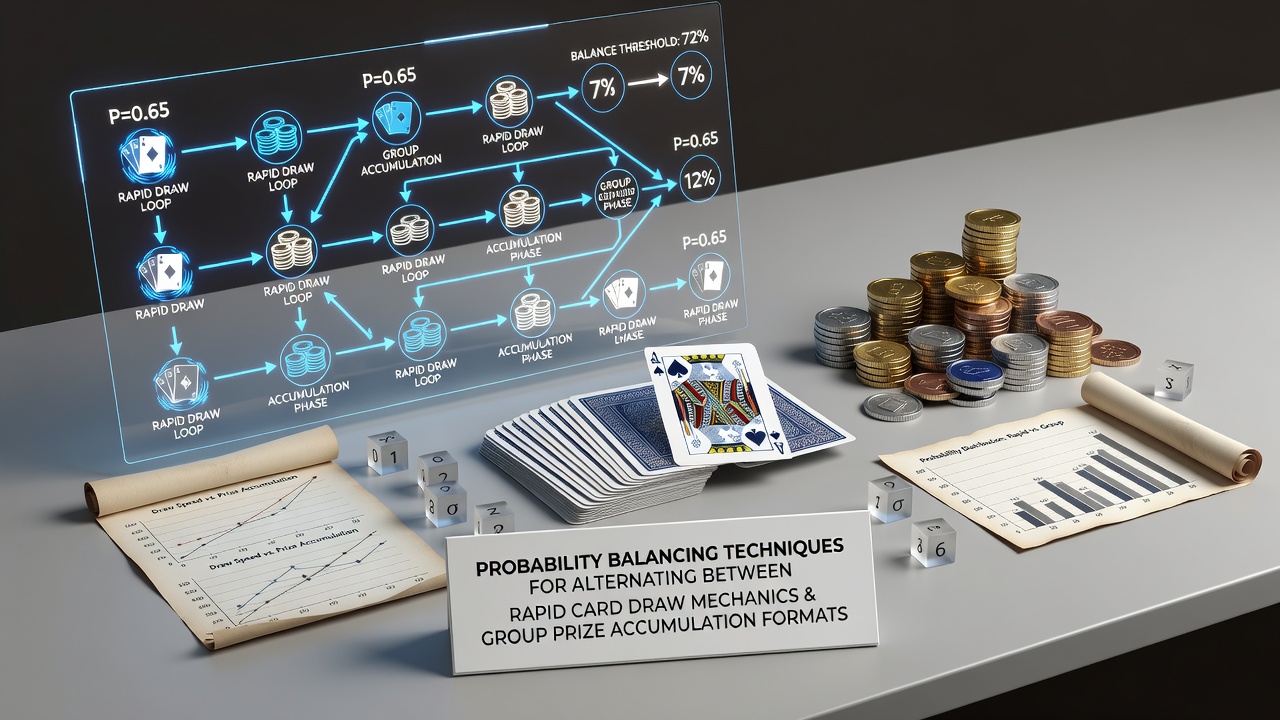
Probability Balancing Techniques for Alternating Between Rapid Card Draw Mechanics and Group Prize Accumulation Formats
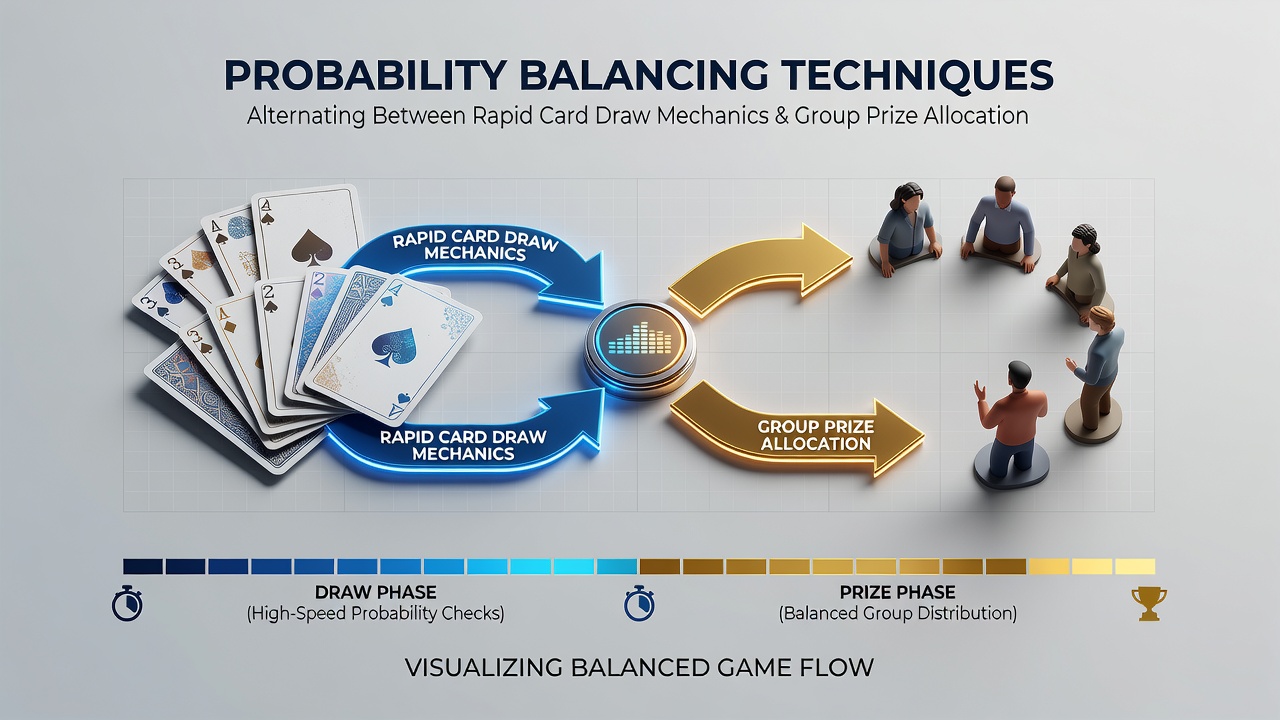
Modern gaming platforms often shift players between rapid card draw systems and group prize accumulation models, which creates distinct probability challenges that operators address through specific balancing methods. Rapid card draw mechanics rely on individual sequences where each draw occurs in quick succession, while group prize accumulation formats build shared pots that distribute rewards based on collective participation thresholds.
Core Differences in Probability Structures
Rapid card draw formats operate on fixed cycle lengths with independent event probabilities that reset after every hand or sequence, whereas group prize accumulation builds variance through shared contribution rates that increase over time until a trigger condition activates payout. Observers note that these structures demand separate calibration approaches because one emphasizes short-term variance control while the other focuses on long-term accumulation curves. Data from regulatory filings indicate that operators adjust hit frequencies in card draws to maintain return-to-player percentages between 92 and 98 percent across sessions.
Key Balancing Methods Used by Operators
Technicians apply weighted random number generators that recalibrate output distributions when switching formats, which prevents carryover bias from one mechanic into the next. One common technique involves dynamic seed adjustment, where the system modifies entropy sources based on recent group accumulation totals to stabilize individual draw outcomes. Researchers have documented cases where platforms use modular payout tables that scale multiplier values according to current prize pool size, thereby aligning expected value across both play types.
Another approach centers on session-based probability caps that limit consecutive high-value draws during rapid sequences while simultaneously accelerating group pool contributions during slower periods. These caps integrate with real-time monitoring tools that track aggregate player activity across multiple terminals or online instances. Studies compiled by academic institutions show such methods reduce extreme outcome clusters by measurable margins when implemented consistently.
Integration of Regulatory Data and Industry Standards
According to records maintained by the Nevada Gaming Control Board, licensed operators must submit probability models that demonstrate seamless transitions between mechanics without creating exploitable patterns. Similar requirements appear in other jurisdictions, where compliance teams verify that accumulated prize data feeds correctly into card draw algorithms during format switches. Figures released in industry reports highlight that platforms conducting quarterly audits achieve more stable player retention metrics compared with those using static configurations.
What's interesting is how operators in September 2026 are scheduled to adopt updated testing protocols from the Australian Communications and Media Authority that specifically address cross-format probability drift. These protocols require simulation runs covering at least 10 million iterations before any new balancing layer receives approval. Experts have observed that such extended testing periods help identify subtle correlations between rapid draw frequencies and group accumulation velocity that shorter tests might miss.
Implementation Examples Across Platforms
Take one regional casino network that alternates daily tournaments between quick-draw video terminals and progressive jackpot tables; the network applies layered probability filters that reset after each format change to maintain equilibrium. In another documented instance, online systems use contribution multipliers that adjust based on the number of active participants in group pools, which in turn influences the base probabilities assigned to subsequent card draws. Data indicates these adjustments keep overall payout ratios within narrow bands despite frequent switches.
Technicians also deploy variance dampening algorithms during transitions, which temporarily reduce the impact of outlier results from one format on the starting conditions of the other. Such methods rely on continuous feedback loops that sample recent outcomes and apply corrective weights without interrupting live play. Those who've examined operational logs note that these loops typically activate within milliseconds of a detected format shift.
Conclusion
Effective probability balancing between rapid card draw mechanics and group prize accumulation formats depends on coordinated adjustments to random generators, payout tables, and monitoring systems. Regulatory bodies continue to refine verification standards, with new guidelines expected to take effect in September 2026 across multiple regions. Operators who integrate these techniques report consistent performance metrics across varied session lengths and player volumes. The ongoing development of cross-format calibration tools reflects the technical requirements of modern gaming environments that combine multiple play styles within single platforms.